Vegetables have always played an important role in traditional Greek and Cretan cooking. Tomatoes, eggplant, zucchini, capsicum, leafy greens, onions and legumes appear throughout the cuisine, often combined simply with herbs and good olive oil.
Rather than treating vegetables purely as accompaniments, Greek cooking frequently makes them the centre of the dish.
This is one reason vegetarian Greek food in Hobart can offer considerably more variety than diners might initially expect. A table can move from dips and pita to meze, salads, stuffed vegetables and sides while still retaining the flavours and sharing style associated with a traditional Greek meal.
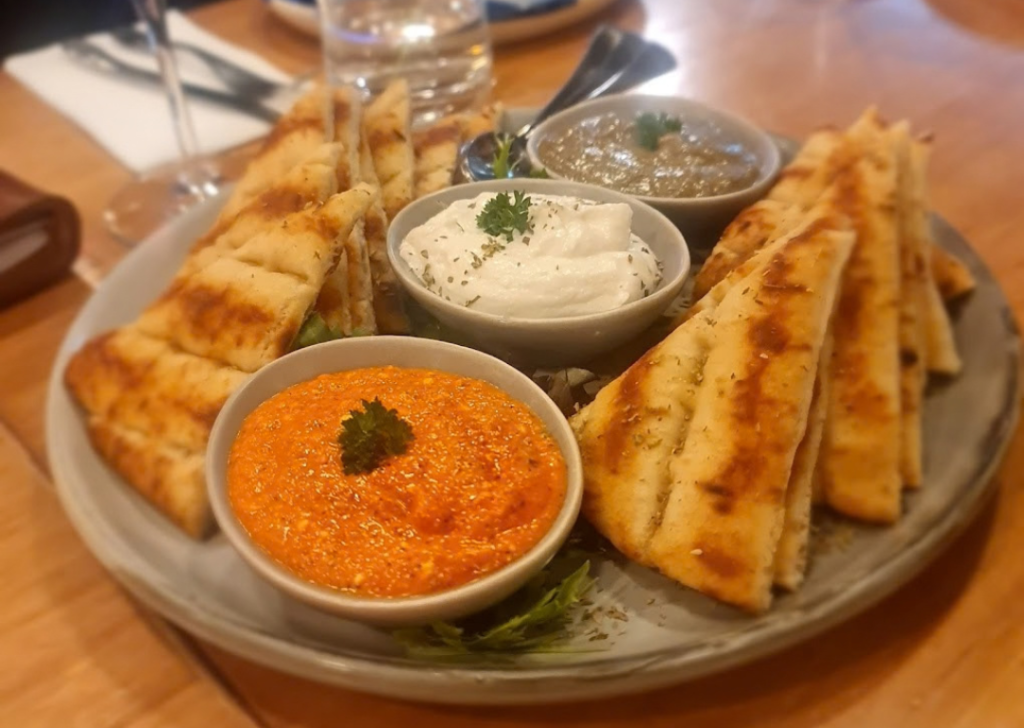
One of the easiest ways to begin is with Greek dips and warm pita bread.
At Urban Greek, the dip selection includes several vegetarian choices. Tzatziki combines thick Greek yoghurt with garlic, cucumber, vinegar, dill and Cretan extra virgin olive oil. Tirokafteri brings together whipped feta, fire-roasted red capsicum, vinegar and chilli, while smoked Melitzanosalata uses charcoal-roasted eggplant with feta, mayonnaise and Cretan herbs.
There are also plant-based choices. Cretan Hommus combines chickpeas and tahini with lemon, olive oil and vegetables, while Fava is made from yellow split peas cooked with vegetables and Cretan olive oil.
Ordering a few different dips is a simple way for the table to experience contrasting flavours before moving on to larger dishes.
Meze is particularly useful for vegetarian diners because you do not have to choose a single main meal. Instead, several smaller dishes can be shared.
Hortopita is a good example of how vegetables and greens are used in Greek cooking. The rustic filo pastry is filled with silverbeet, leeks, fennel, baby spinach and onion sautéed with olive oil and herbs. A vegan option is also available.
Dolmades offer another traditional choice. Vine leaves are filled with seasoned rice, shredded vegetables and herbs. At Urban Greek, they are served with dill yoghurt, with a vegan option available.
These dishes also help explain an important part of Greek cuisine. Vegetarian cooking is not necessarily a modern addition created specifically for contemporary dietary preferences. Many vegetable, grain and legume dishes have deep roots in Greek food culture.
For something richer, Kolokithokeftedes are lightly fried zucchini patties made with vegetables, cheese and fragrant herbs. They work particularly well as part of a mixed meze selection.
Cheese lovers can also consider Saganaki, where Greek kefalotiri cheese is grilled and served with lemon, herbs and house-made fig jam.
Combining dishes with different textures is one of the easiest ways to make a vegetarian Greek meal feel like a complete feast rather than a collection of side dishes.
Anyone exploring vegetarian Greek food in Hobart should become familiar with Gemista.
Gemista translates broadly as “stuffed” or “filled” and is a classic example of Greek home-style cooking. At Urban Greek, oven-baked tomatoes and capsicum are filled with herbed rice and seasonal vegetables and served alongside hand-rolled dolmades.
A vegan option is available.
What makes a dish such as Gemista interesting is its simplicity. Instead of relying on meat substitutes, the dish develops flavour through vegetables, rice, herbs and careful cooking.
It is also a useful introduction to the more homely side of Greek cuisine, where seasonal produce and traditional recipes are as important as the charcoal grill.
A vegetarian Greek feast can become even more varied by adding salads and sides.
The Cretan Village Salad combines cucumber, cherry tomatoes, capsicum, onions and Greek olives with whipped feta mousse, oregano and Cretan extra virgin olive oil. A vegan option is available.
The Afrattion Salad combines mixed leaves with tomatoes, chickpeas, black-eyed beans, capsicum, grilled haloumi and spring onion, finished with lemon-mustard vinaigrette.
Sides can add another layer to the table. Options include lemon roast potatoes, seasonal vegetables, steamed rice, pita bread and fries, with several suitable for vegan diners or adaptable where indicated.
Greek food is particularly well suited to sharing, so vegetarian diners do not necessarily need to think in terms of a starter followed by an individual main.
Instead, consider building the meal across the table.
You might begin with two or three contrasting dips and pita, followed by a combination of meze such as Hortopita, Dolmades or Kolokithokeftedes. Add Gemista as a more substantial traditional dish, then include a salad and vegetables or potatoes for the table.
This approach allows everyone to taste several dishes and reflects the communal way Greek food is traditionally enjoyed.
Choosing a restaurant can become more complicated when one person is vegetarian, another eats meat and somebody else has a gluten-free or vegan requirement.
Shared Greek dining can make those situations easier because different dishes can be brought to the table rather than everyone having to order exactly the same style of meal.
Urban Greek’s menu identifies vegetarian, vegan and gluten-free options, and dietary substitutions are also available for banquets. If your group has particular dietary requirements or food allergies, it is best to mention them when booking and speak with the team before ordering.
This is especially important for allergies, where suitability involves more than simply checking whether a dish contains meat or dairy.
Finding vegetarian Greek food in Hobart does not have to mean compromising on the Greek dining experience. Traditional Greek and Cretan cooking already makes extensive use of vegetables, legumes, herbs, grains, cheeses and olive oil, creating plenty of possibilities for a generous meal.
At Urban Greek, you can explore that tradition through dips, meze, salads, Gemista and other vegetable-based dishes, then build your selection around the table.